
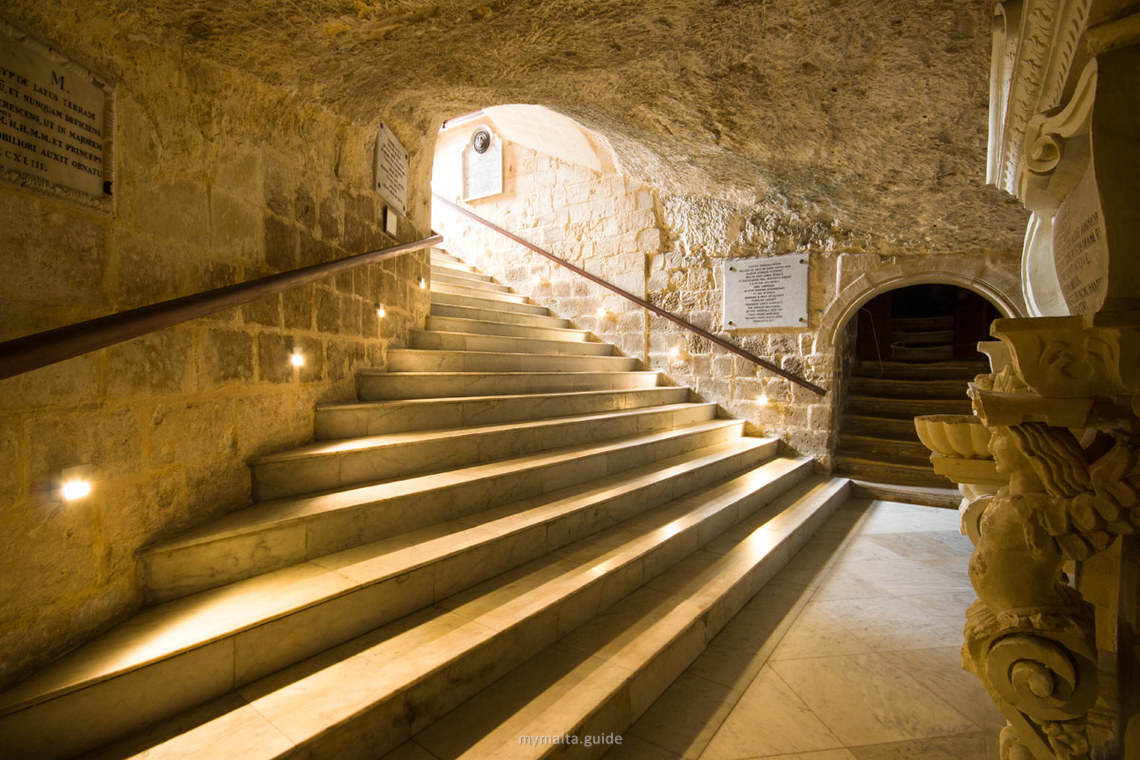
Rabat does not look like a place with a dark underground. The streets are busy with buses and shops, and the grotto’s entrance is tucked beside a church. Then you go down a stair, the street sounds fade, and you stand in a cave said to have sheltered the apostle Paul.
The grotto
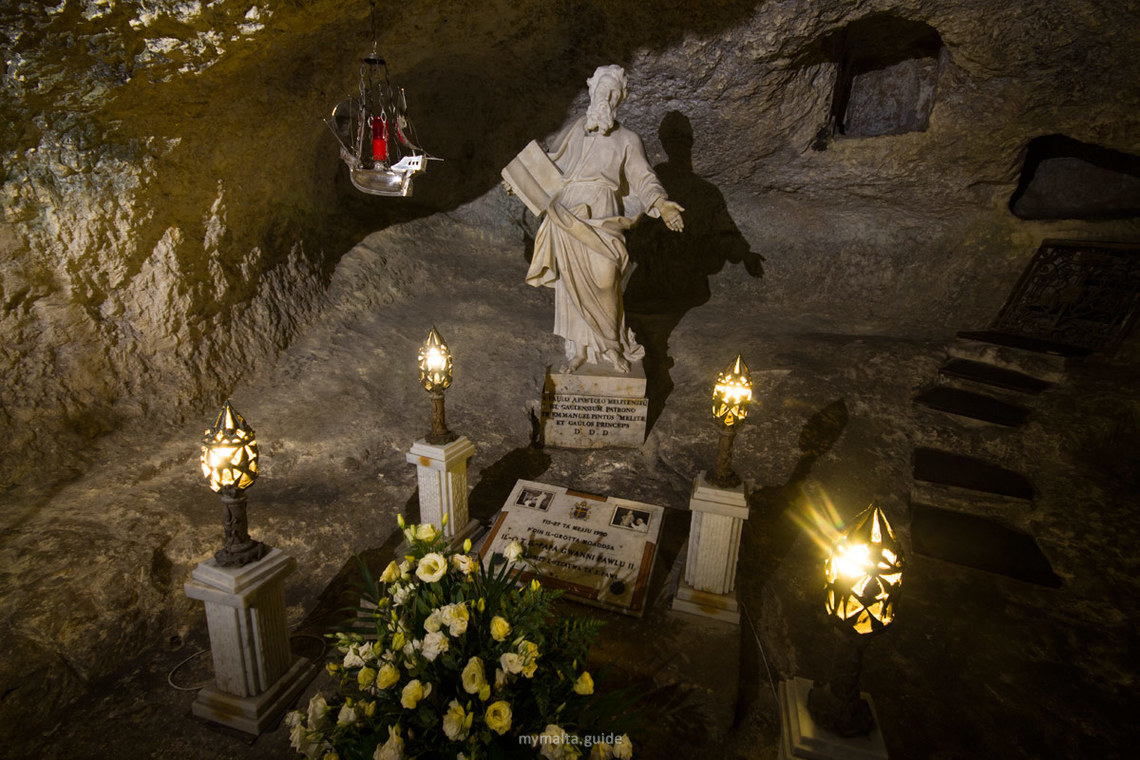
The story goes back to the Acts of the Apostles, which describes how a ship carrying Paul to Rome was wrecked on Malta, around the year 60. According to local tradition, he spent time in a cave in what is now Rabat. A small statue of the saint stands inside, and the walls are marked by the touch of pilgrims over many centuries.
Whether or not the story is literal, the grotto has been a place of devotion for a very long time. A church dedicated to St Paul was built above it, and parishioners still use it for worship. The cave has the look of a holy place rather than a museum, and visitors tend to lower their voices.
The catacombs
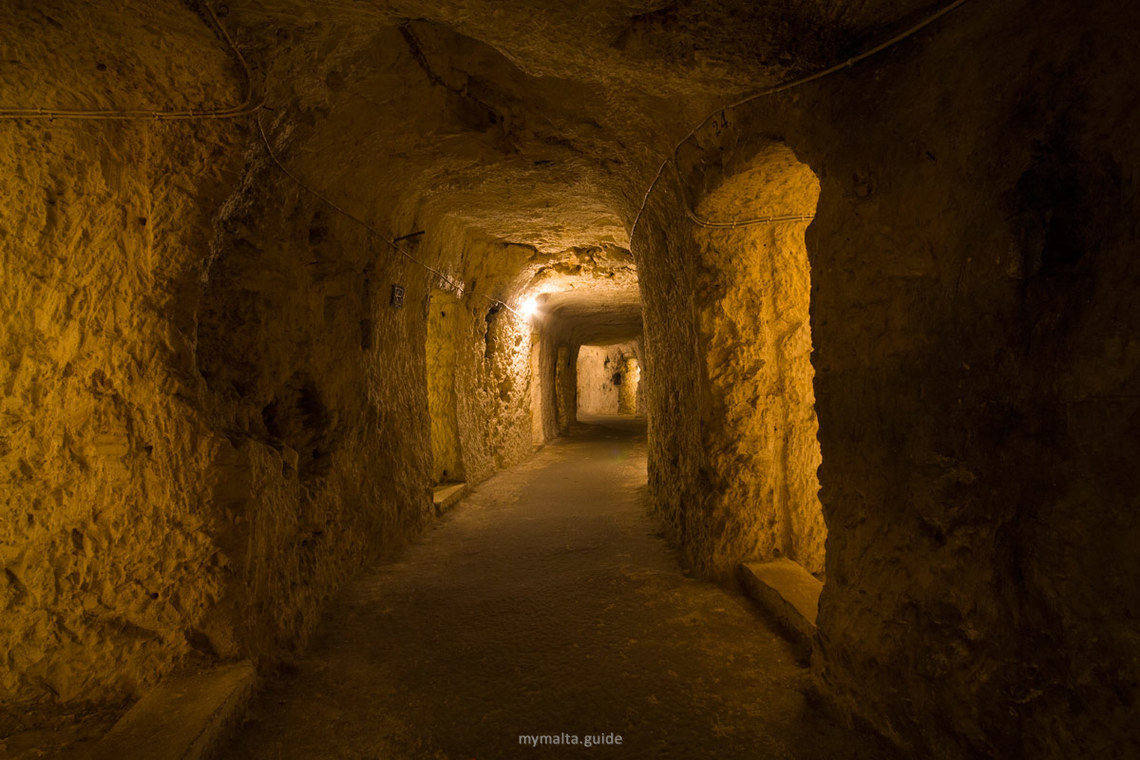
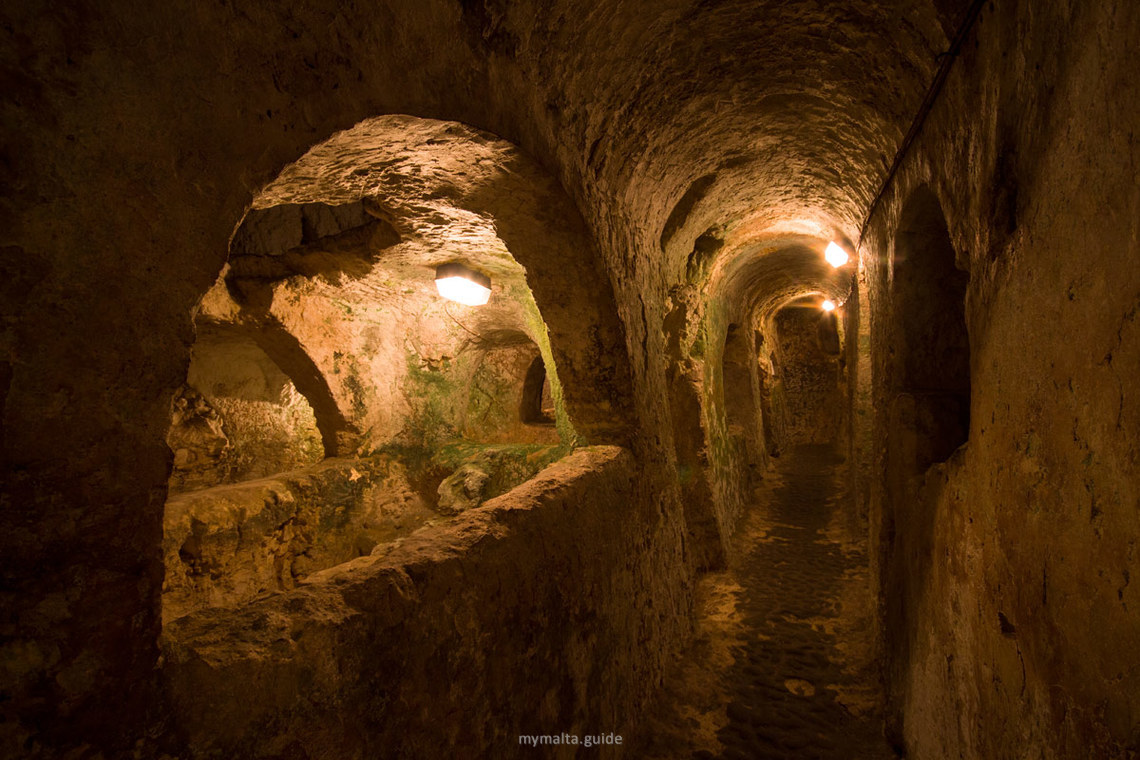
Next to the grotto lies one of the major networks of Roman-period burial places on the islands. Roman law required the dead to be buried outside the walled city of Melite, now Mdina, so cemeteries spread across what is now Rabat. The soft limestone was easy to excavate, and the catacombs include simple graves, larger family tombs and corridors lined with shelves.
The catacombs were used from the Roman period into the early Christian centuries. Christians used part of the network for burial and, at times of persecution, for private worship. After Christianity became the official religion under Constantine, burial continued, and the sites remained part of the religious landscape.
Only a small portion is open. The complex has many tunnels, but just a few are accessible, and that is enough for a good visit. The rest has been closed to protect both the visitors and the fabric.
The central hall
One of the highlights is a large hall at the heart of the open section. It was the main burial space, and it has painted decoration from the Roman period, which is rare in Malta. The paintings are faded but still readable, and information panels explain what to look for.
Notice the carved tables and benches. Some of the burial places have a shelf set at table height, where relatives gathered for meals in memory of the dead. Others have niches or raised sections. Use these details to read the layout: the central hall is the hub, and the tunnels fan out from it like branches.
What to expect in the first ten minutes
The entrance area gives a short introduction to the history of the grotto and the catacombs, with panels and a few displayed finds. Read them before going down, because the underground sections have little signage and the guidance given there is brief. Take your time on the way down, as the first steps are among the steepest.
Practical points
The steps are steep and the floors can be damp, so shoes with a good grip are better than sandals. The temperature underground is cool all year. Lighting is soft, and your eyes need a minute to adjust. A pushchair cannot be taken down, so a baby carrier suits families.
Allow an hour to an hour and a half, including the exhibition at the entrance. Because the site is popular with tour groups, mornings and late afternoons are quieter, and weekday visits are generally calmer than weekends.
Check the opening hours before you set off, as the site closes on certain public holidays and last admission comes before closing.
Around the sites
St Agatha’s Catacombs lie a short distance away and add a crypt with early paintings and a museum. The smaller catacombs of St Cataldus are close by, and the Wignacourt Museum is a short walk. Most visitors combine two or three of these in a morning, with a pause for pastizzi and tea in the centre of Rabat.
Mdina begins just beyond the main square. Its quiet lanes, the cathedral and the views from the bastions are best seen in the late afternoon, once the day-trip crowds have left. Rabat is known for its pastizzi, so a stop at one of the pastry shops rounds off the underground part of the day.
If you are short of time, choose this site over the other catacombs for the combination of grotto, tomb network and painted hall, and visit in the cooler hours of the day.


