
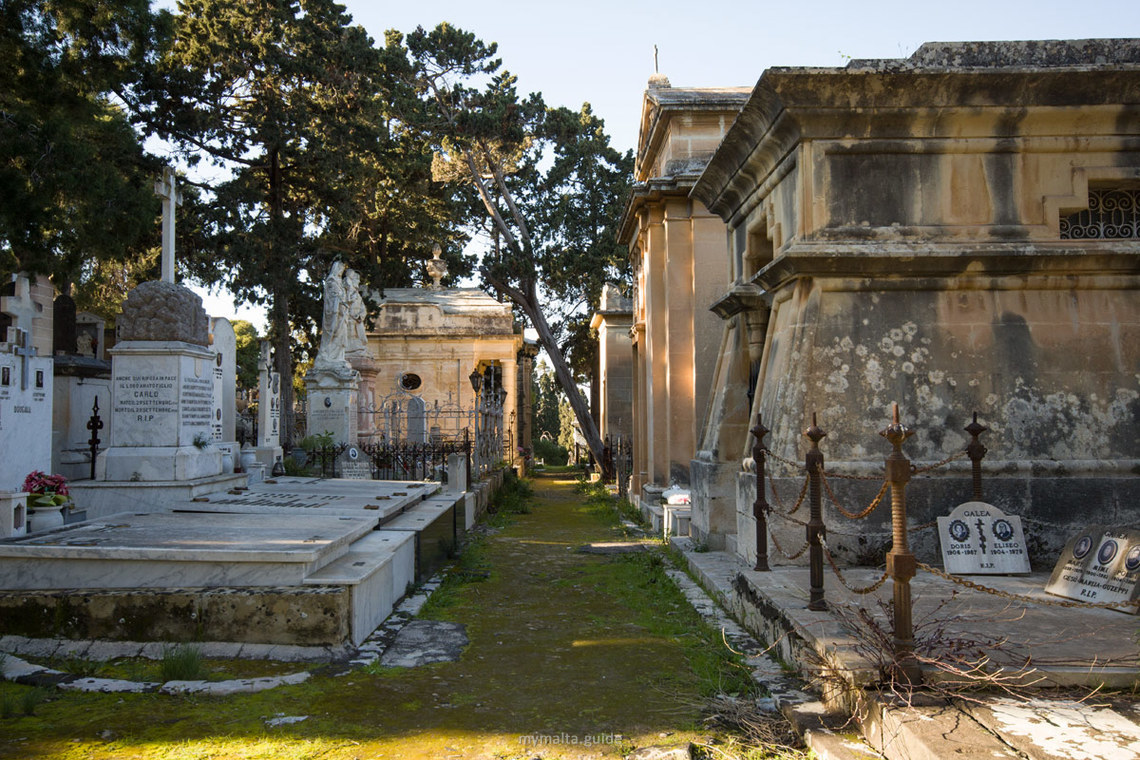
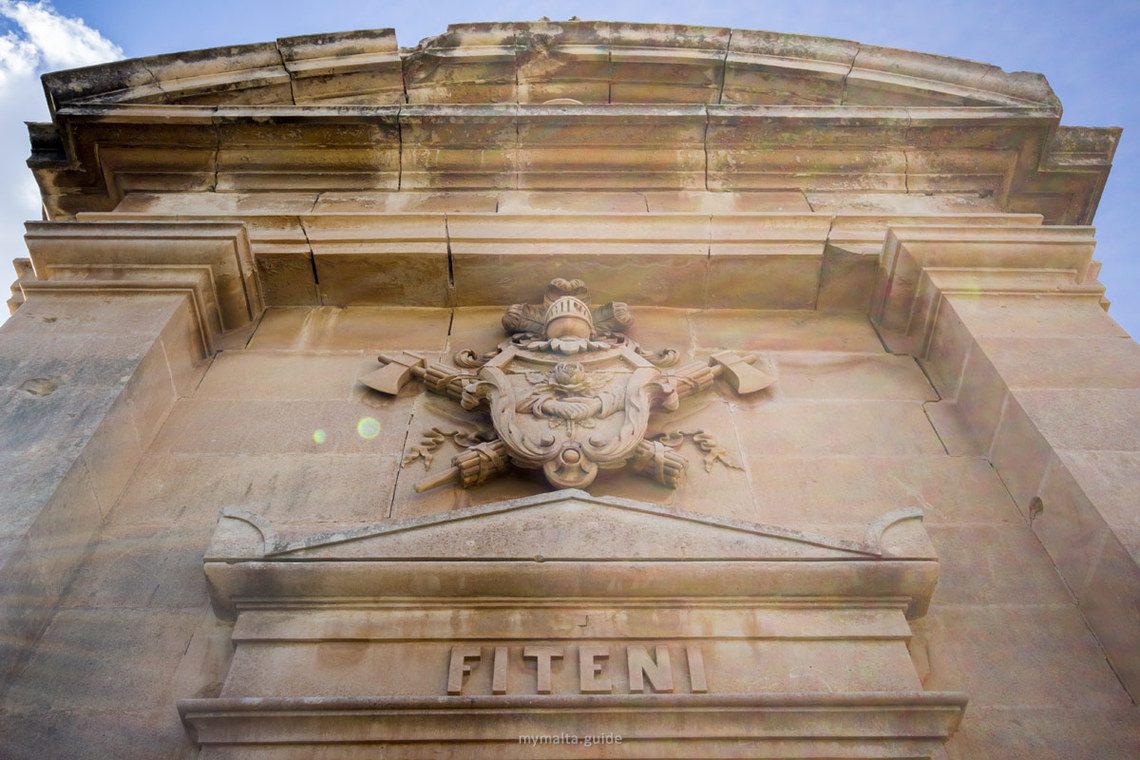
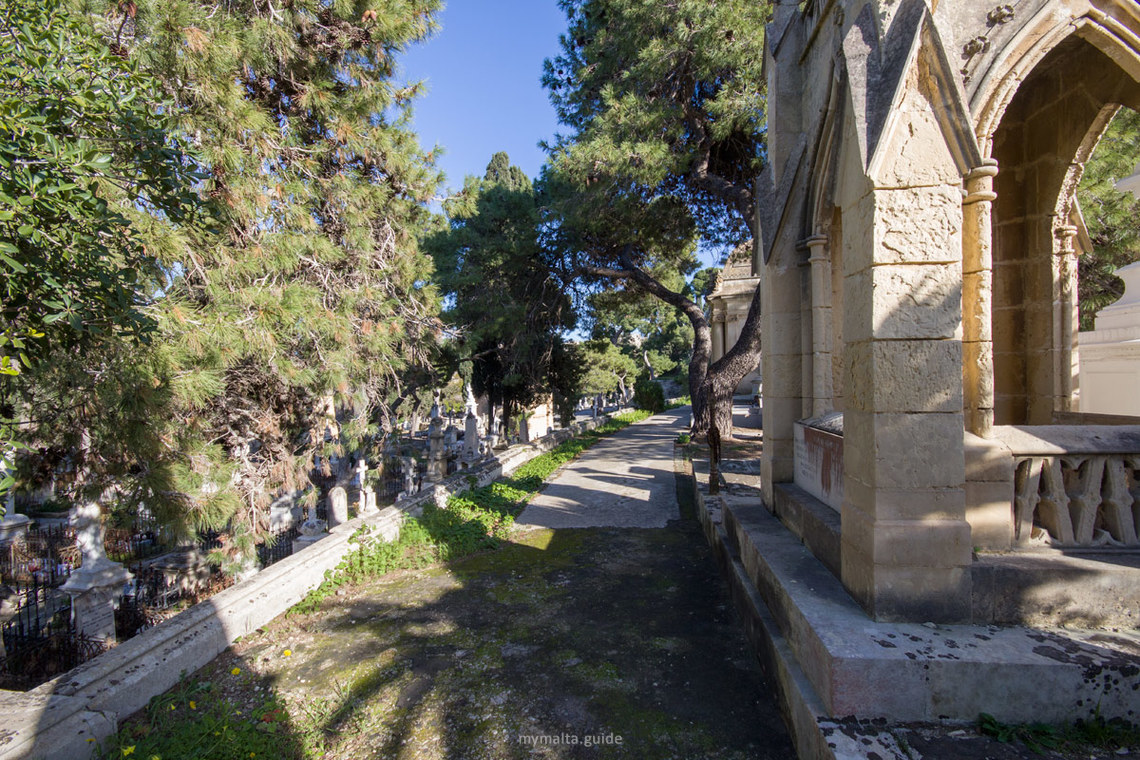
The approach is straight and wide, with cypress-dark avenues running up an elongated hill and tombs lining both sides like small houses. Addolorata Cemetery in Paola is one of the largest on the island, and the first impression is of scale: row after row of marble, bronze and carved limestone, all leading the eye up towards a pale chapel.
How it came to be
The necropolis was designed by the Maltese architect Emanuele Luigi Galizia and built between 1862 and 1869. The aim was a modern, planned burial ground outside the crowded old towns, and the long flat hill above Paola gave room for it. Since then about 200,000 burials have taken place here. The ground also received soldiers who died in both world wars, so military graves sit among civilian ones.
For its first hundred years only Roman Catholics could be buried here. The rule ended in 1974, when Malta became a republic and the Church’s formal role over burial grounds fell away. After that, burial became open to everyone regardless of faith, which is why a visitor may notice differences in the style and language of the newer monuments.
The chapel on the hill
The full name is Santa Maria Addolorata Cemetery. The “Santa Maria” refers to the main chapel at the top, the largest building on the site. It is neo-Gothic in style, which is unusual enough in Malta, where Baroque dominates, that people who like Gothic architecture will want to walk up for a closer look. The pointed windows and pale stone are visible from far down the avenue, and they work as a landmark when you wander among the plots.
Tombs, statues and crypts
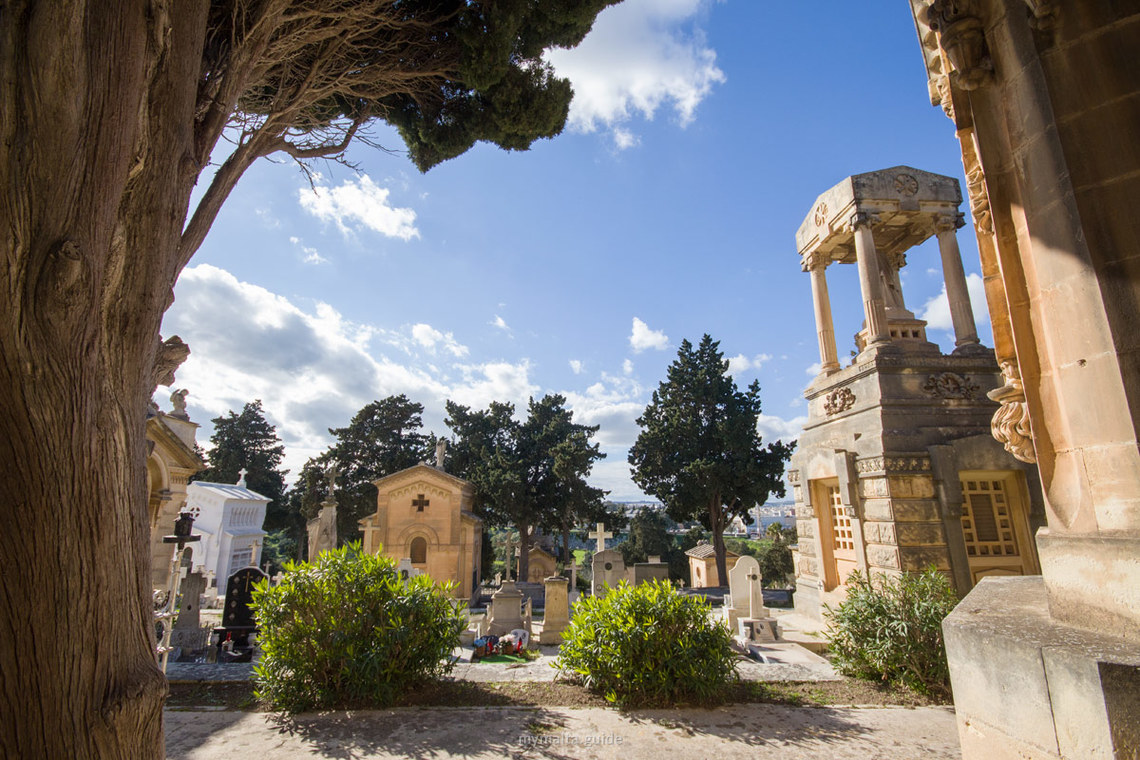
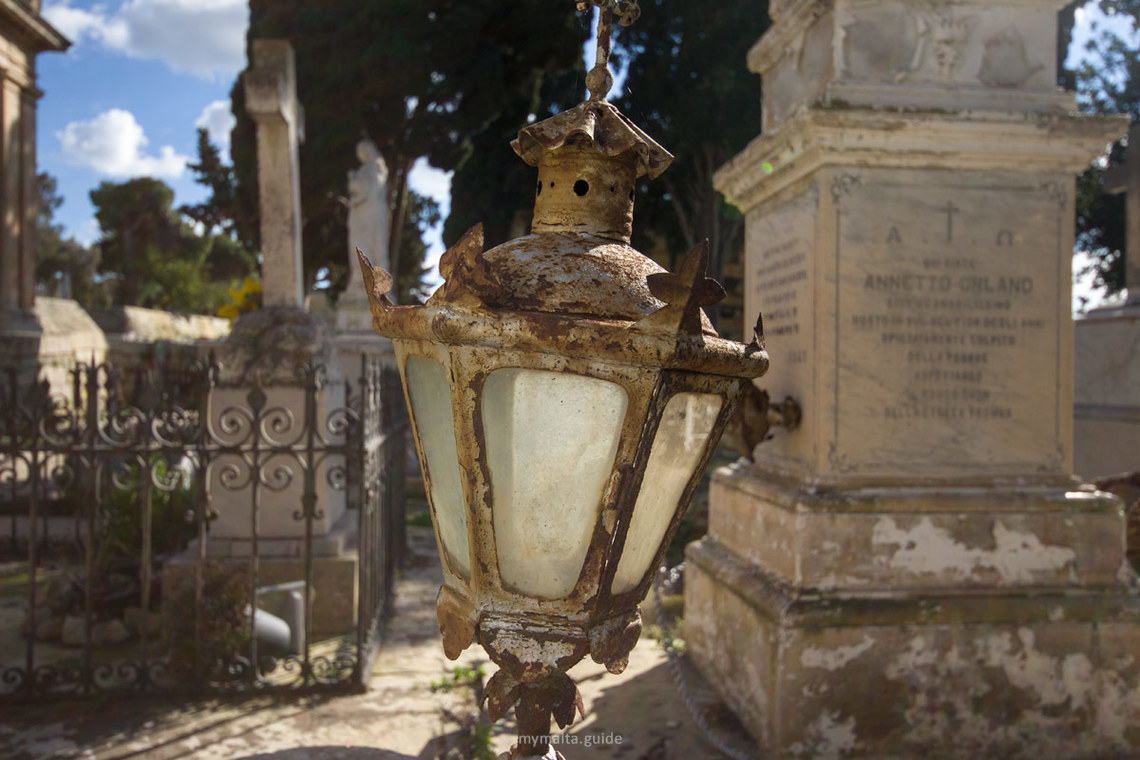
The monuments are the reason most visitors come. Some are simple stones; others are elaborate, adorned with statues in bronze and marble, carved drapery, urns and figures of mourning. A number of family crypts stand on the grounds, built like small chapels with iron doors and inscribed lintels. Look at the dates and the languages on the stones: Maltese, Italian and English appear side by side and tell their own story about the islands’ history.
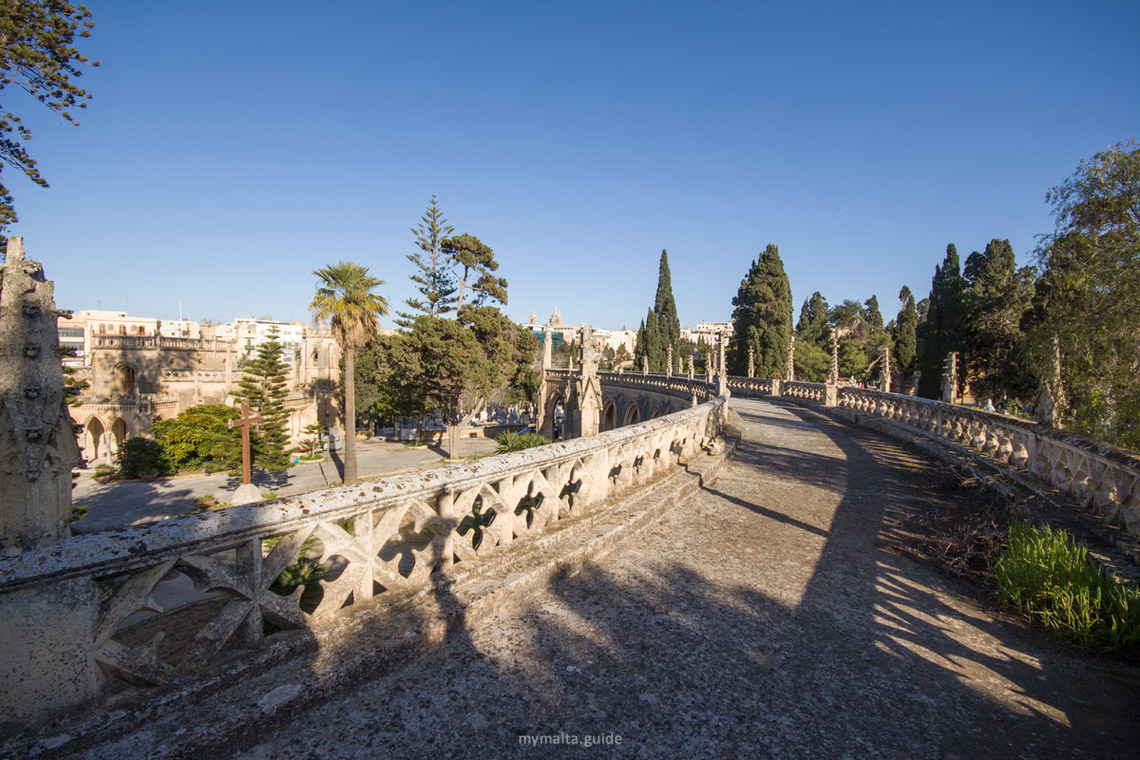
At the entrance, a balustraded parapet allows you to step up and observe part of the necropolis from above. It is worth doing at the start, because from there the planned geometry of the paths becomes clear. Later, at ground level, it is easier to get lost among the plots.
Visiting with respect
This is a place of mourning, not a sightseeing park. Visitors are welcome to look at the monuments, but the first rule is to behave as in a church. Dress modestly, keep your voice low, and step aside for any funeral party. Do not photograph mourners. If a service is under way at the chapel, leave that part for later.
Opening times are listed in the facts box on this page; they can change around holidays, so it is sensible to check before setting out. Late afternoon light is best for photographs, but allow time to leave before closing, since the grounds are large and the walk back to the gate takes longer than expected.
Seeing it as a cultural site
Walking through a cemetery is a specific way to see a country. The care taken over monuments, the flowers left on graves and the regular maintenance say a good deal about how the Maltese treat their dead, and the artistry of the sculptors is worth attention in its own right. Leave time to read inscriptions, since many carry short epitaphs or name the trade or regiment of the person buried.
What to bring and what to pair it with
Sunscreen and a hat help in summer, because the hill is open and the avenues have little shade. Wear flat, comfortable shoes; the paths are paved but long. There is no need for a guide, though a map of the main avenues is useful if one is available at the gate.
Addolorata sits a short way from the Tarxien Temples and the Hal Saflieni Hypogeum, so a half-day of old Malta can run from prehistoric stones to a Victorian necropolis. The Chinese Garden of Serenity in Santa Luċija is also close and makes a gentler stop afterwards. Leave the cemetery by early evening and have a coffee in Paola before heading back to Valletta.


