
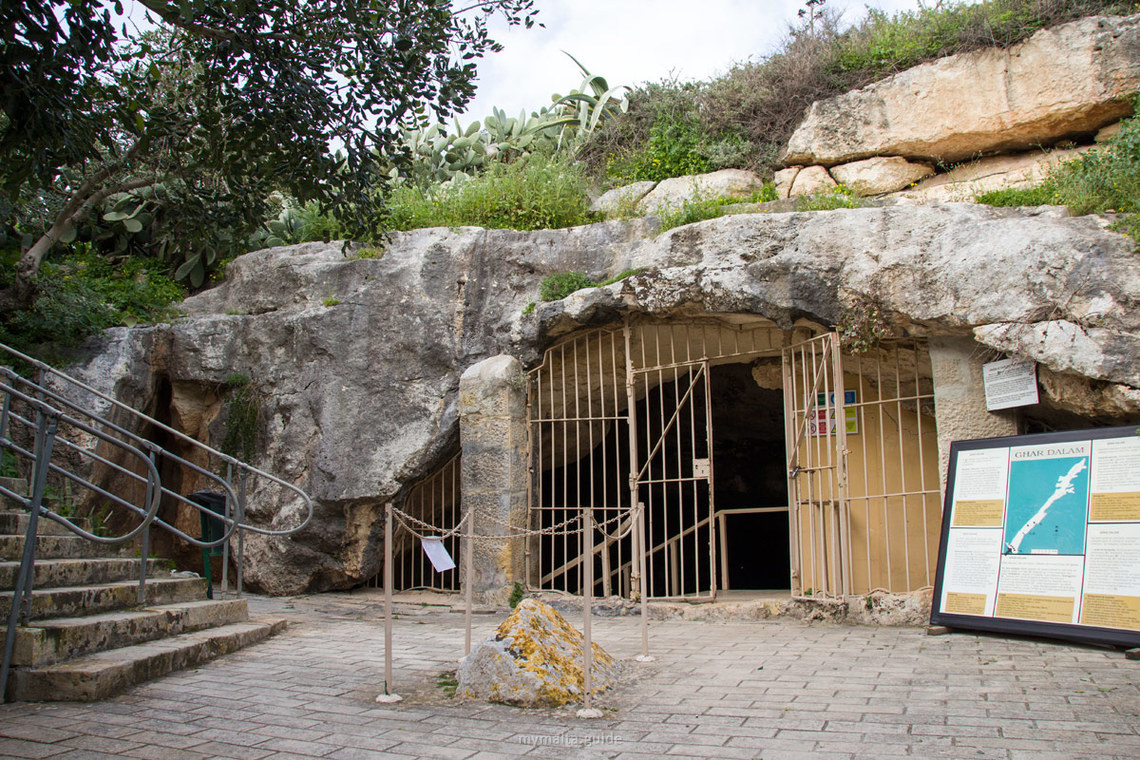
Cool air comes out of the cave mouth before you reach it. Walk down the steps from the ticket area and the temperature drops several degrees, the light turns grey, and the rock above you is pitted with old drips. This is Għar Dalam, the Cave of Darkness, and the Maltese name is accurate.
The cave itself
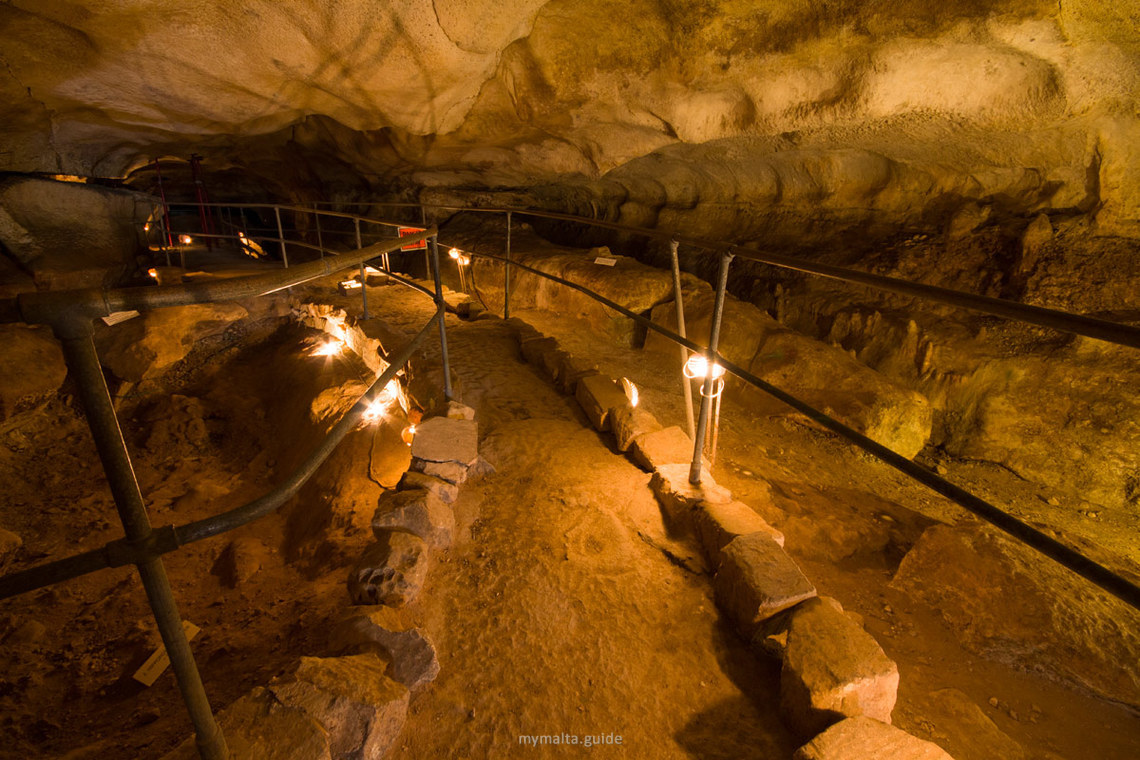
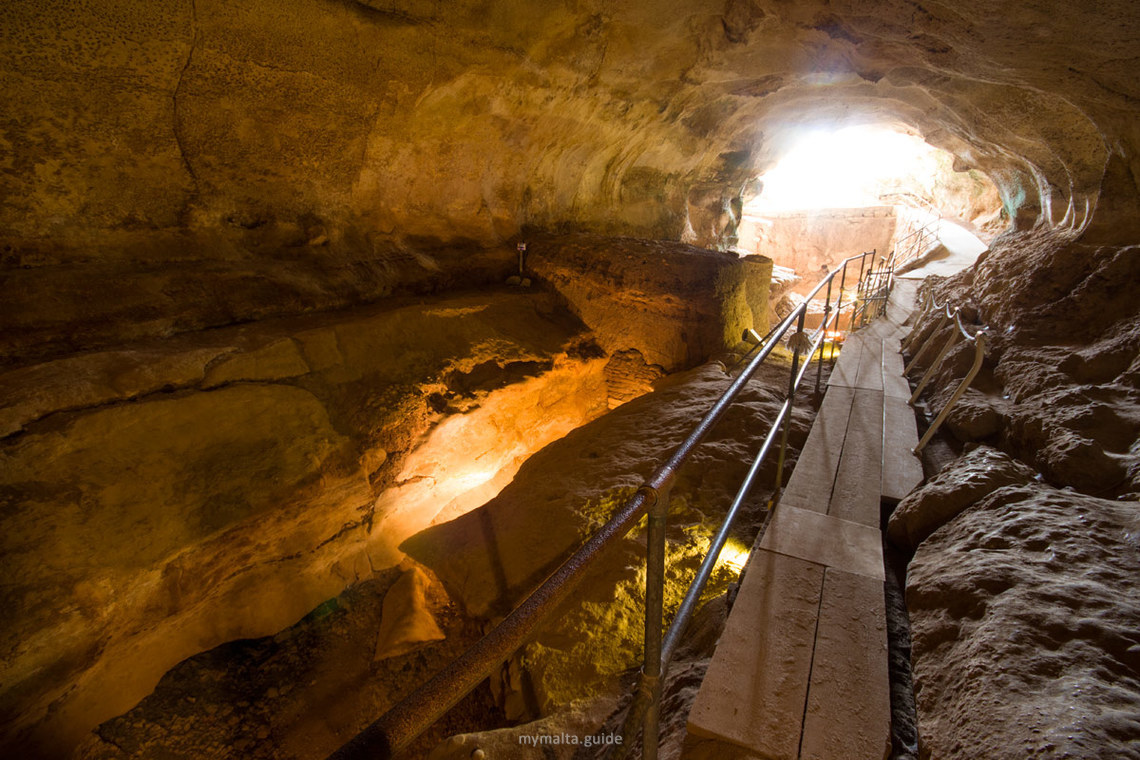
The cave runs for about 144 metres into the limestone, but only the first fifty or so are open. A raised walkway follows the floor, and the walls show cut sections through the layers of earth that filled the cave over many thousands of years. The deposits form a stack of strata. Near the top are traces of people and their domestic animals. Below them come layers with deer, then pebbles, then a deep layer with the bones of dwarf elephants and hippos, and finally a clay base with little bone but good preserved plant material.
That stacking is the reason scientists value the site. The animals in the lower layers lived on Malta when it was connected to the European mainland or at least reachable across a narrow gap, and the dwarfed forms show how island populations shrink over time. The oldest finds, such as the hippopotamus remains, are put at around 180,000 years old.
Human history
Traces of human presence include pottery and tools from the Neolithic period, and the cave has long been regarded as one of the earliest places where people lived on the islands. Scientific work began in the nineteenth century, around 1885, and the site was opened to the public in the 1930s. During the Second World War the cave served as a shelter.
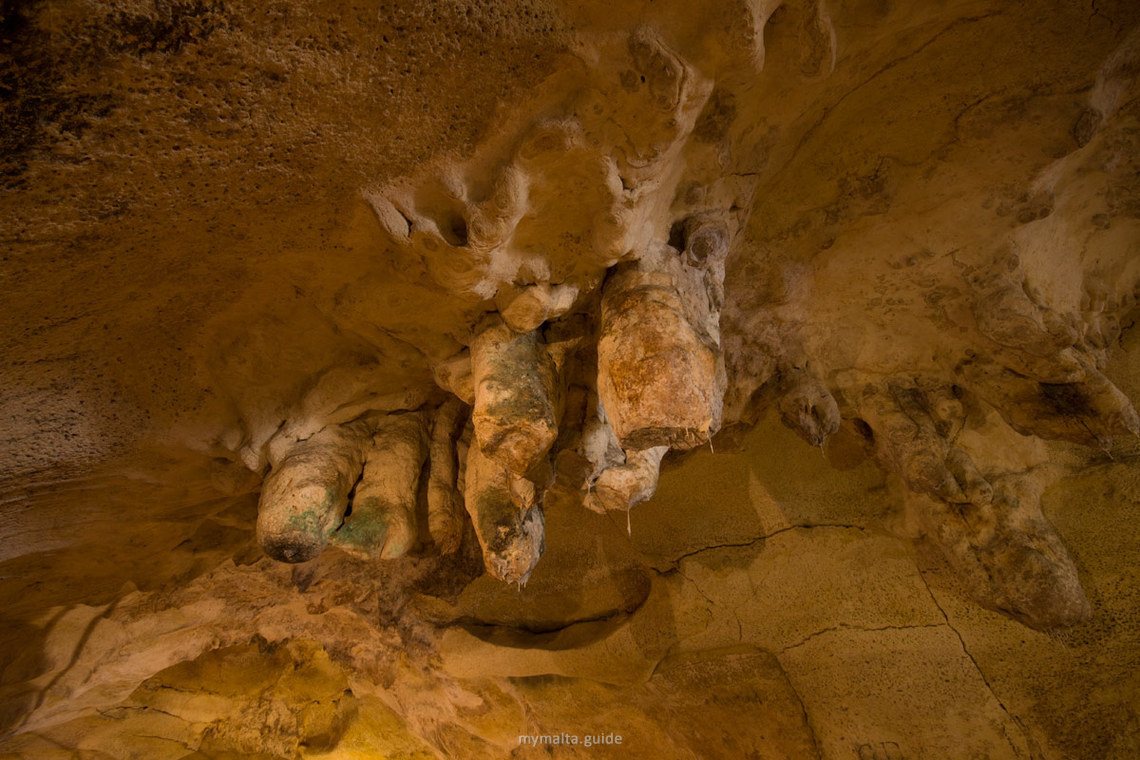
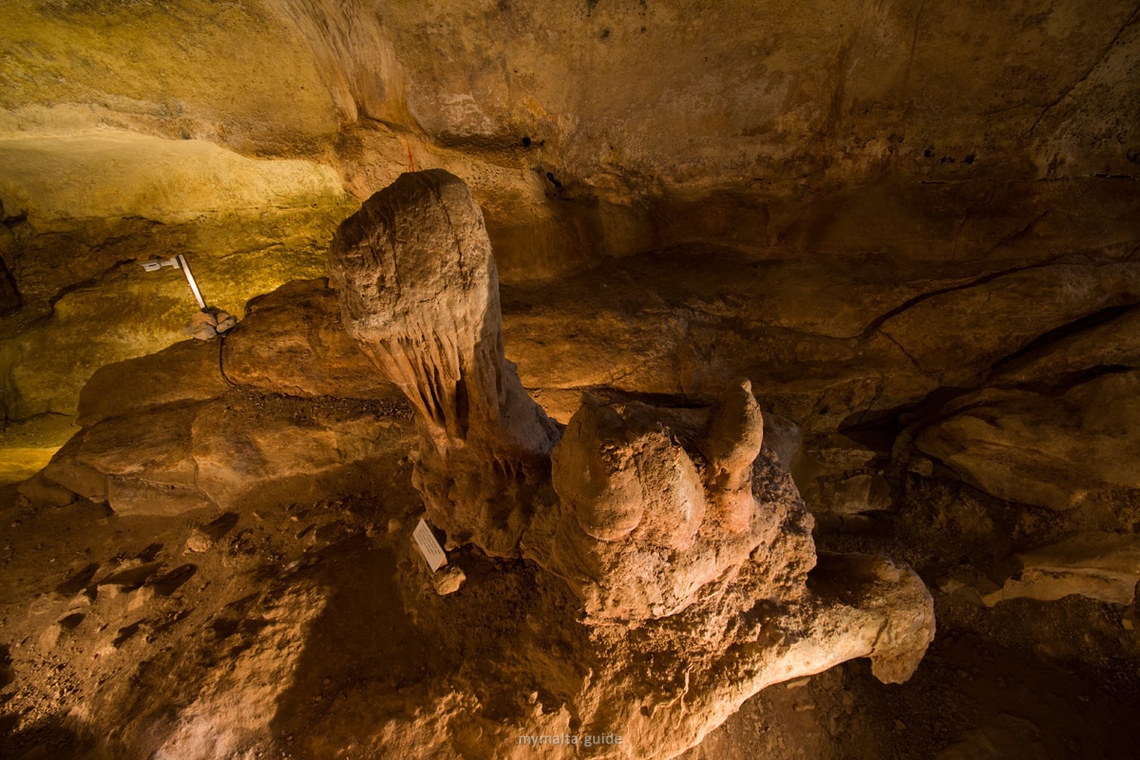
A more recent investigation in the late 1980s, led by the Italian researcher Emmanuel Anati, recorded signs of rock art on stalagmites. Some of it has been damaged by vandals over the years, which is part of why the cave is no longer open past the first section. The museum also lost two pieces to theft in 1980, among them the remains of a dwarf elephant, a reminder that small institutions have to guard their collections.
The museum
Beside the entrance stands a small museum, established in the twentieth century, with cases of bones, teeth and tusks arranged by layer. The dwarf elephant skeletons are the highlight, since the adults were not much taller than a large dog. Labels explain what each piece is and where in the cave it was found. It takes twenty minutes to see properly, and that suits families.
The museum is a good place to start. Seeing the bones first makes the cave walk more meaningful, because you then know what you are looking at in the cut sections of the wall.
Around the site
Għar Dalam sits above Birżebbuġa, a harbour town on the south-east coast. Pretty Bay is about fifteen minutes away on foot or a couple of minutes by bus, which makes it easy to follow the cave with a swim. The fishing village of Marsaxlokk is a short drive on, with its painted boats and seafood restaurants, and the Delimara peninsula lies beyond it with a lighthouse and quiet coves.
It also fits comfortably on the way to or from the airport, since it lies only a few kilometres from it. If you land in the morning, the cave is a gentle first stop and cool enough for jet lag.
When to go
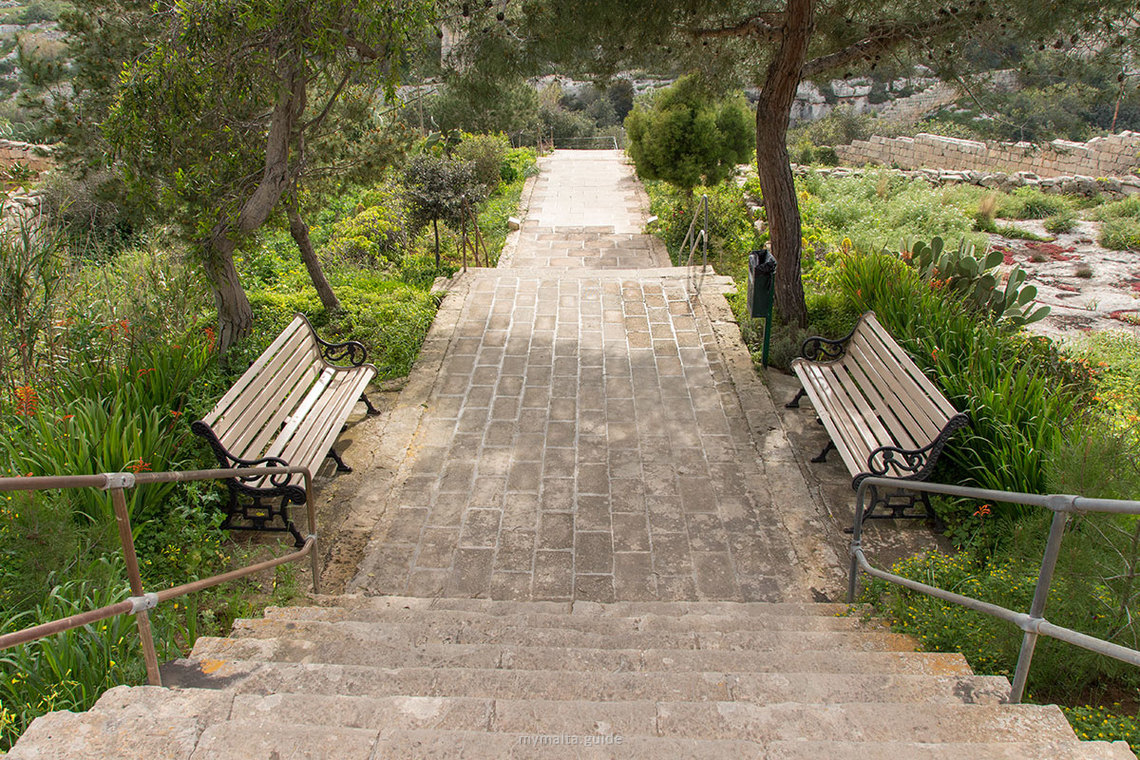
Because the cave is cool and covered, it works in any season. Summer is the hardest for the open sections of the walk between the car park and the cave mouth, which are exposed to the sun, so early morning is better in July and August. In winter you may be one of only a handful of visitors.
Photographs are awkward in the dim light, so a phone with a night mode or a steady hand helps. A layer is more useful than a torch.
Check the listed hours before you go, since the site closes on a few public holidays and last admission comes before closing. Combine the cave with Pretty Bay in the same morning, and keep Marsaxlokk for the evening, when the harbour is at its best and fish restaurants start to fill.


