
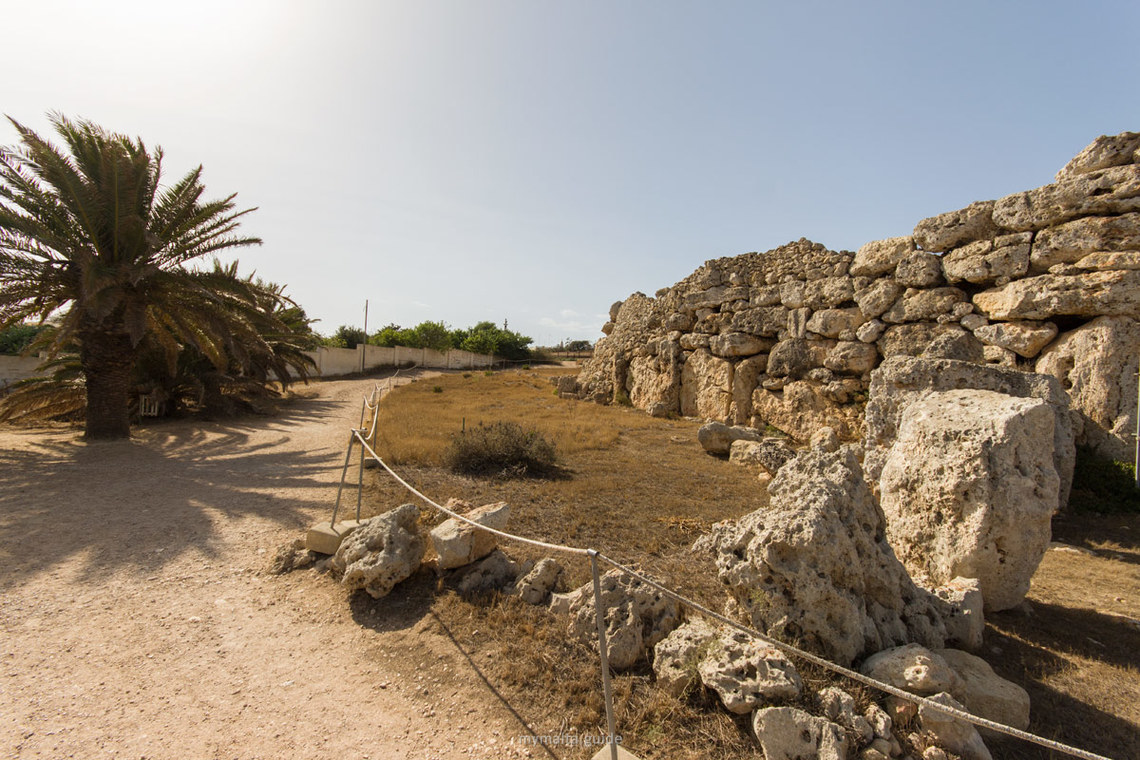
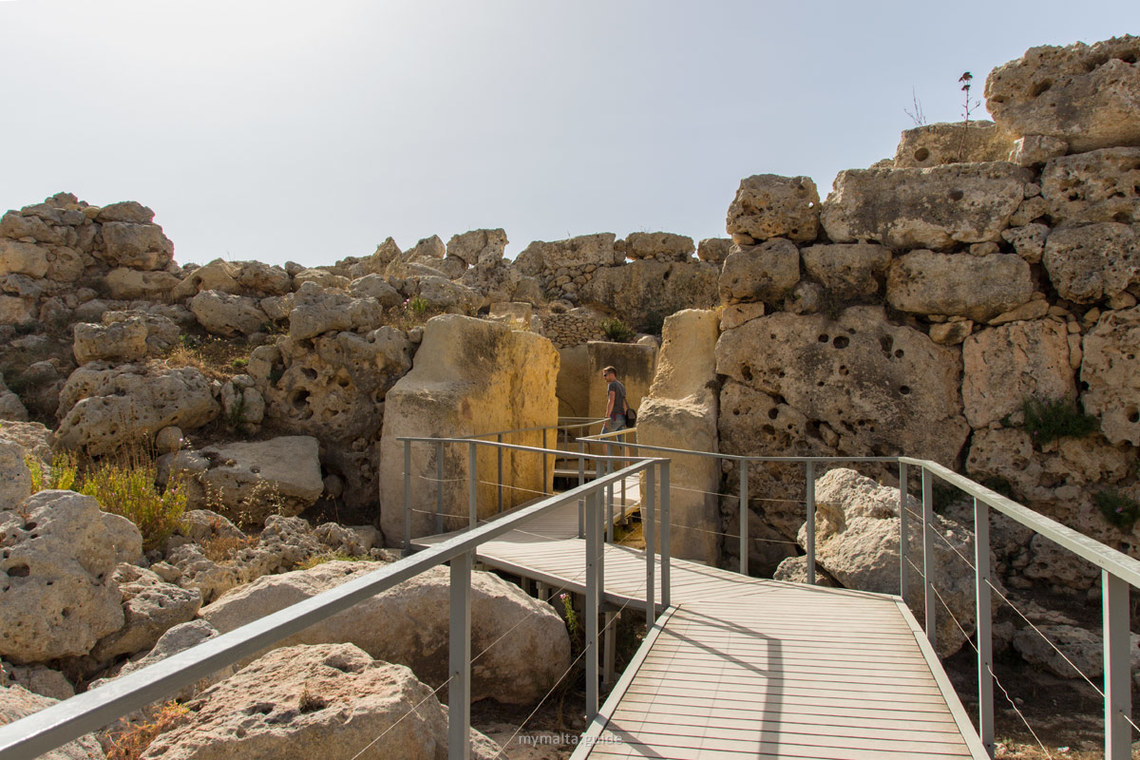
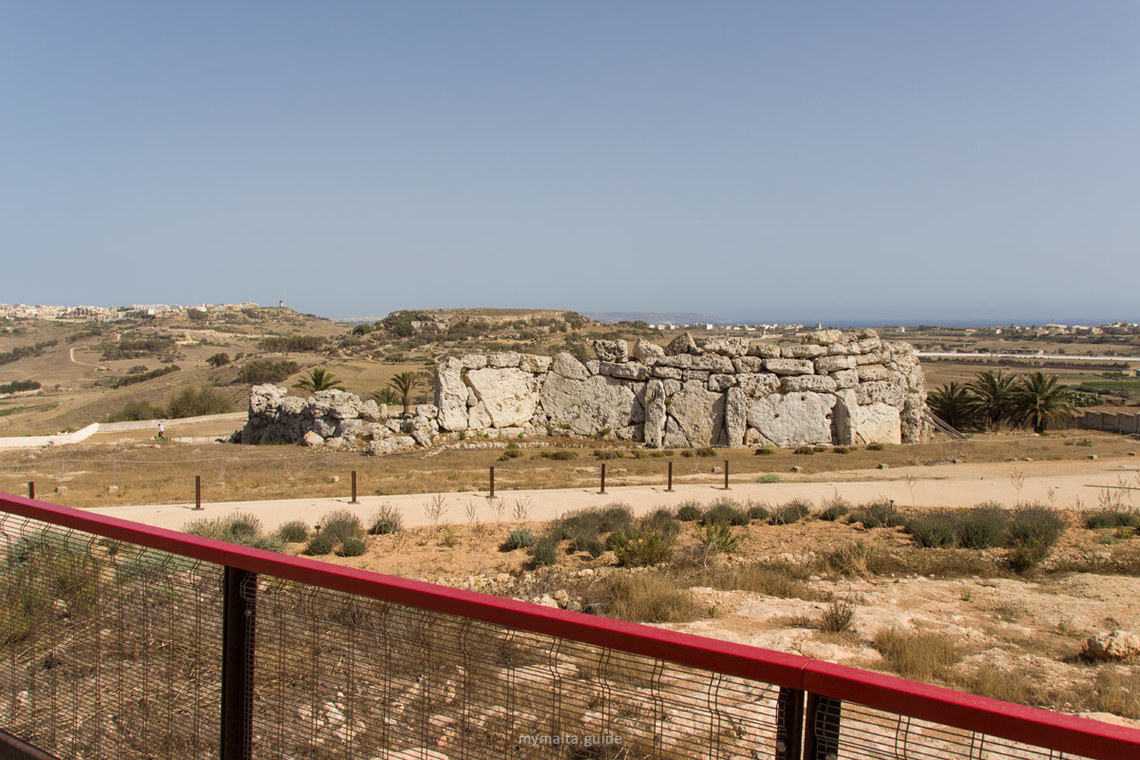
The outer wall is the first thing that stops you. It rises from the ridge above Xagħra in courses of rough limestone blocks, some of them close to six metres long, stacked without mortar and leaning slightly inward. Stand beside it on a quiet morning and you can hear nothing but swifts and the occasional tractor in the fields below.
The temples
Ġgantija is two temples side by side, sharing a boundary wall. The older one, to the south, is the larger and dates from about 3600 BC. The second sits to the north and was added a few centuries afterwards. Each follows the clover-leaf plan typical of Maltese megalithic temples: a forecourt, a passage, and then paired apses opening off a central corridor.
The scale is easy to underrate from photographs. The walls were built of globigerina and coralline limestone, the heaviest blocks weighing many tonnes. Smaller stones were packed between the large ones, and the whole structure holds by weight and fit. The builders had no metal and, so far as the evidence shows, no wheel, so the rollers and levers they used remain a matter of discussion among specialists.
Inside the walls
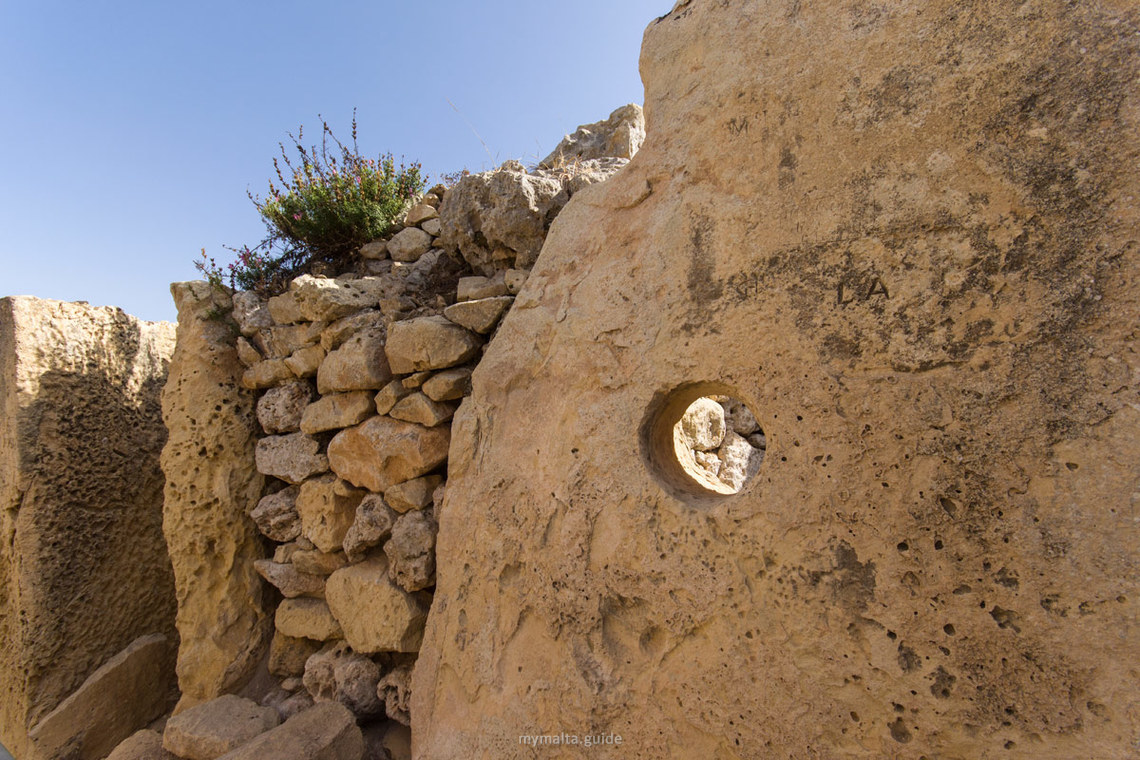
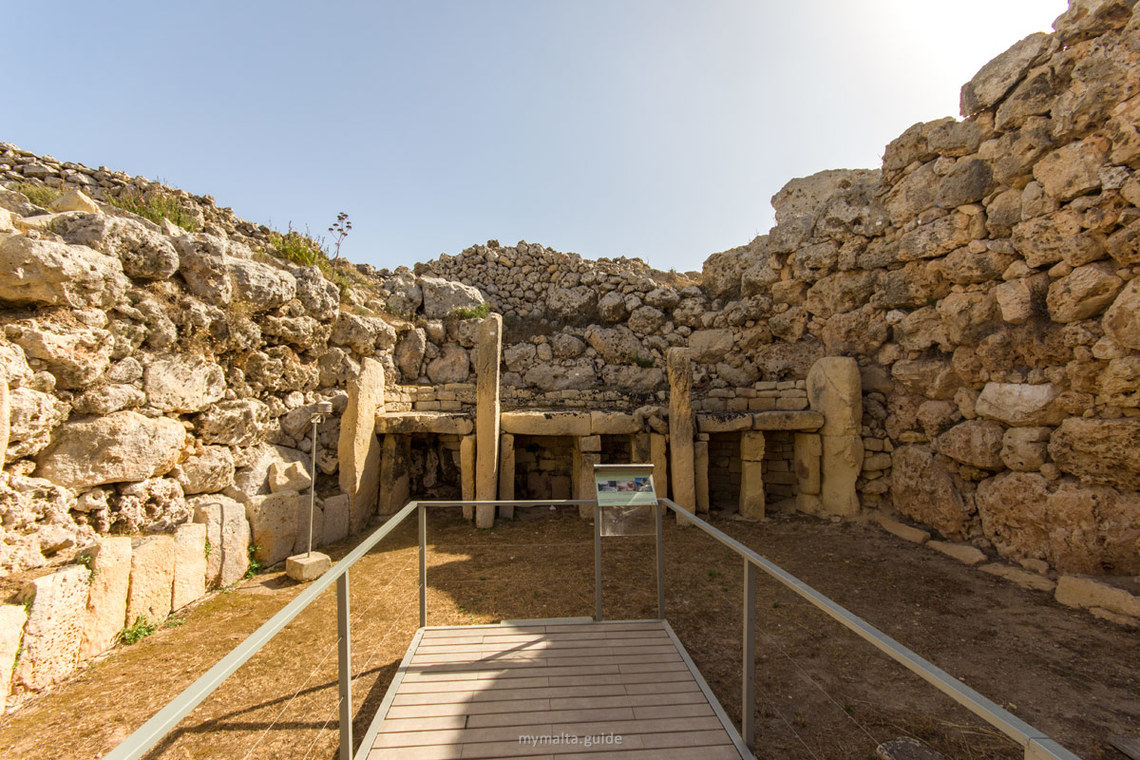
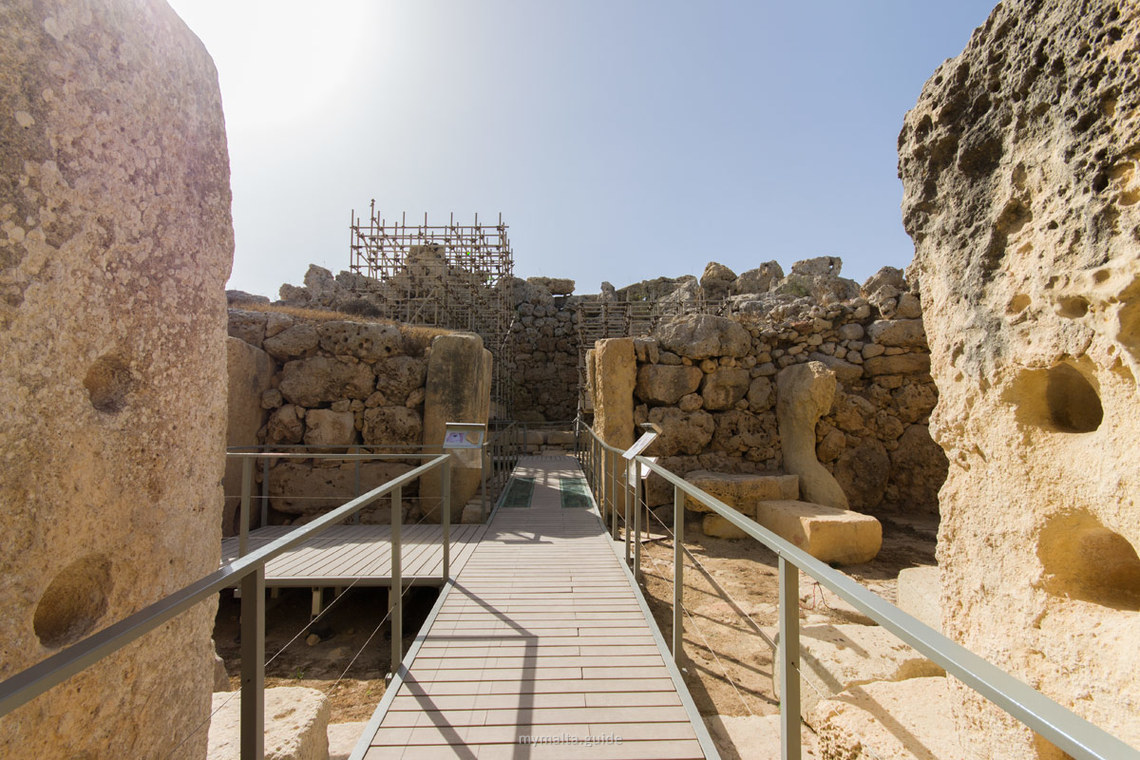
Walk through the entrance between two upright slabs and the passage opens into semicircular chambers. In several apses you can see hearth-like features, a stone with a bowl-shaped cavity that may have held liquids in ritual, and altar-like slabs. Some blocks carry pitting or carved decoration. Others are polished smooth by use and weather.
The niches that once held figurines are empty today. The statues found at Maltese temples have been taken to the National Museum of Archaeology in Valletta, and the best of the Gozo finds are in the Gozo Archaeology Museum in Victoria. Interpretations point to a fertility cult, which fits the rounded, body-like shape of the plan, but details of the rituals are guesswork. Plaques on the site explain where the evidence stops.
The visitor centre and approach
A small exhibition at the visitor centre sets the temples in context: Neolithic life on Gozo, the excavation history and a handful of finds. It is brief but well pitched, and worth ten minutes before you walk up. A palm-lined path leads from the centre to the ridge, and views to the north show the patchwork fields typical of Gozo.
The site is open to the sky, and you walk on gravel and bare rock inside the walls. Hats and water matter in summer, because there is little shade. Sturdy sandals are fine, but flip-flops are less comfortable on the rough ground.
Timing and combinations
The best light comes in the first hour after opening, when the long shadows make the courses of stone readable and the groups from the cruise ships and organised tours have not yet arrived. Late afternoon is another quiet spell. Winter and spring are pleasant, with green fields around the temples, while August midday is hot and exposed.
Xagħra itself is worth a stroll. The village square has cafés, and a few minutes away is Ta’ Kola Windmill, a restored eighteenth-century mill whose entry is covered by the same ticket. The Ġgantija ticket is therefore good value if you use both sites on the same day. Nearby on the plateau you can also visit the Xagħra Stone Circle, an underground burial site, though it is a separate site and its access arrangements should be checked on their own.
Where to go afterwards
Ramla Bay is the obvious follow-up. The red-gold beach lies a short drive north of Xagħra and is one of the best swimming spots on Gozo, so a morning among the stones followed by an afternoon in the sea is a very good day. Victoria and its Citadel are about fifteen minutes by car in the other direction and fit an evening visit.
If you are travelling from Malta, the ferry from Ċirkewwa to Mġarr takes about twenty-five minutes. Buses meet the boats and run to Victoria, from where a second bus takes you to Xagħra. Hiring a car for the day gives more freedom, since Gozo’s bus network is thinner outside peak hours.
Reading the site
Look at the lowest courses on the outer wall. The biggest blocks sit at the base, set on edge, while smaller stones fill the gaps above. The builders also left the surface rough in places and dressed it only where visitors would stand, which is why the inside faces look smoother.
If you have time, walk once around the full outer wall before going in. It adds ten minutes and explains the plan far better than the interior does, and you can see how the two temples press up against each other.
Check the heritage agency’s website for current opening times and last admission before you travel, because winter and summer hours differ.


